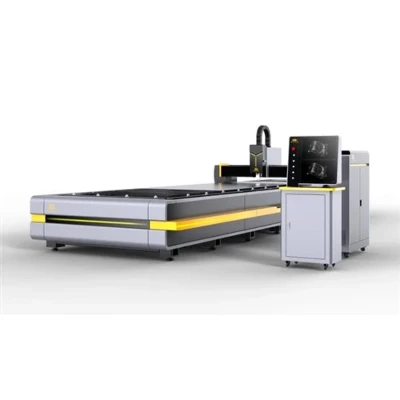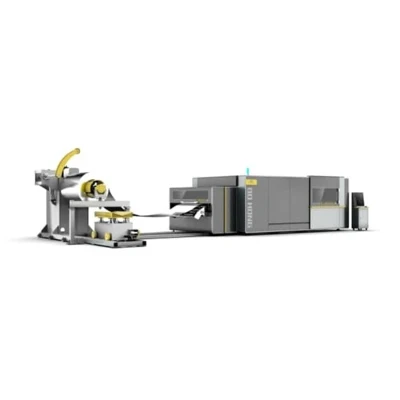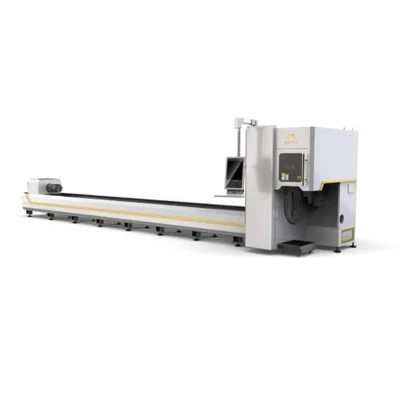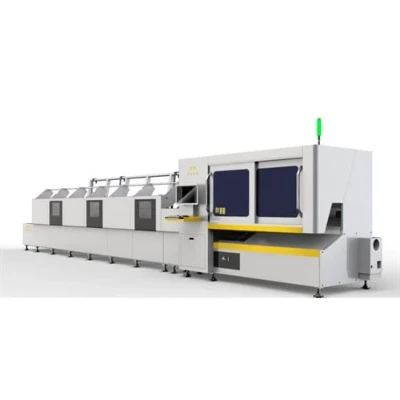


Fiber laser cutting machines are primarily designed for various metal materials, though they can also process certain specialized non-metallic materials. Overall, their performance in the metal processing sector far surpasses that of traditional CO₂ laser equipment.
Ferrous Metals (Best Suitability)
Carbon Steel: The ideal material for fiber laser cutting; low-carbon steel yields the best results. High-power models can stably cut plates 20–30mm thick with a kerf width as narrow as 0.1mm, producing smooth edges that require little to no post-processing grinding.
Alloy Steel: Most alloy structural steels and tool steels yield straight, slag-free edges. However, high-speed tool steels containing tungsten and hot-work die steels are prone to melt erosion and slag adhesion, requiring strict control of process parameters.
Galvanized Sheet, Al-Zn Coated Sheet, Silicon Steel, Spring Steel: These common industrial sheets can be cut efficiently, making the technology suitable for applications such as sheet metal fabrication, motor cores, and elastic components.
Non-Ferrous Metals (Highly reflective materials require special configurations)
Stainless Steel: Excellent results on thin sheets; strict control of heat input minimizes the heat-affected zone (HAZ) and fully preserves the material's corrosion resistance. It is a mainstream processing method for kitchenware, medical devices, and decorative parts.
Aluminum Alloy: A highly reflective and thermally conductive material requiring equipment with anti-reflection protection. Standard models can cut sheets under 6mm, while high-power models using nitrogen assist gas can process 8–12mm thick plates; widely used in aerospace and lightweight automotive components.
Copper and Brass: Pure copper (red copper) has extremely high reflectivity, making direct processing impossible for standard equipment; high-power models with special anti-reflection configurations can cut thin sheets under 2mm. Brass is slightly easier to process, allowing for stable, burr-free cutting on sheets 1–3mm thick.
Titanium and Titanium Alloys: Commonly used in the aerospace industry. Using oxygen as an assist gas yields fast cutting speeds but tends to create an oxide layer; switching to air as the assist gas produces a high-quality cut surface with only minimal slag at the bottom, which is easy to clean off. Nickel-based alloys: Various high-temperature superalloys can be cut using an oxidation-melting mechanism, yielding consistent edge quality suitable for the machining of components for high-end energy and chemical processing equipment.