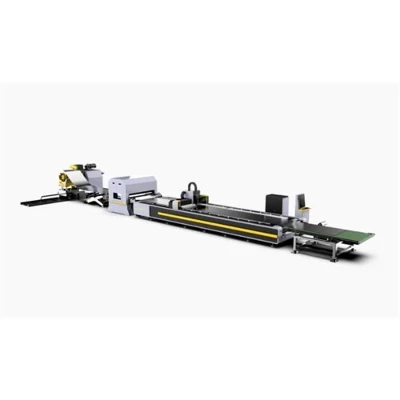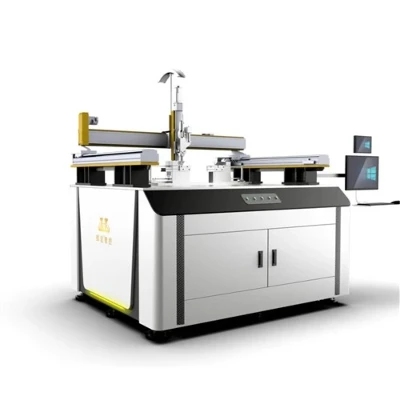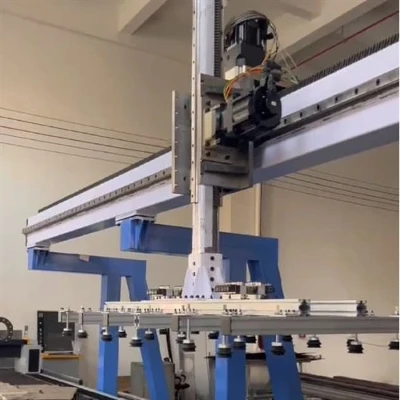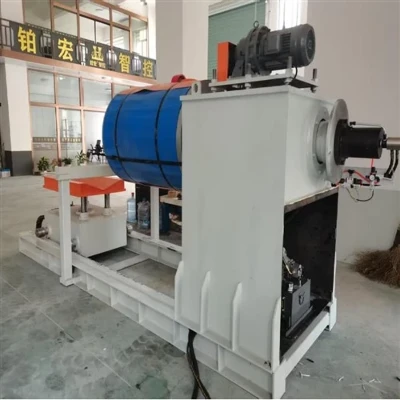


The long-term maintenance costs for fiber laser cutting machines are generally low-far below those of traditional multi-axis mechanical cutting or plasma cutting equipment-making them a highly cost-effective choice for industrial processing machinery.
Reference for typical annual maintenance costs
Based on a standard 1500W model operating 1,000 hours per year, the total annual maintenance cost is approximately 30,000–50,000 RMB-only about half the cost of traditional multi-axis cutting solutions.
Core consumables: Focusing protective lenses require replacement every 3–6 months (approx. 500–1,500 RMB per set); auxiliary gas (nitrogen/oxygen) costs range from 20–50 RMB per hour, depending on the thickness of the material being cut.
Wear parts: Fiber lasers feature a maintenance-free lifespan exceeding 80,000 hours; they require only simple quarterly optical path calibration rather than frequent replacement of core components.
Labor/Maintenance: Routine tasks involve only weekly optical path cleaning and monthly gas line inspections; annual labor costs for maintenance are approximately 2,000–3,000 RMB.
Scenarios that drive up maintenance costs
Improper operation leading to cutting head collisions or core circuit board burnout: opting for "replacement instead of repair" can result in costs of tens of thousands of RMB per incident, whereas chip-level component repair can reduce expenses by 40%–60%.
High workshop dust and humidity levels, combined with a lack of preventive maintenance, accelerate optical lens contamination and electrical component aging, leading to rising failure rates and maintenance costs over time.
Long-term continuous cutting of ultra-thick plates (≥50mm) doubles protective lens wear and triples auxiliary gas consumption, significantly increasing the unit maintenance cost.