The operation of the entire production line relies on millisecond-level feedback loops:
Sensing Layer: Various sensors distributed across the line (photoelectric, pressure, temperature, vision sensors, etc.) capture physical signals-such as material position, equipment status, and process parameters-in real-time, providing the system with comprehensive on-site data.
Decision-Making Layer: A control system centered on PLCs (Programmable Logic Controllers)-integrated with HMIs (Human-Machine Interfaces) and MES/ERP management systems-analyzes the collected data and generates precise operational commands based on preset programs.
Execution Layer: Actuators such as servo motors, pneumatic cylinders, industrial robots, and CNC machine tools receive commands to perform specific production tasks-including material handling, machining, welding, and assembly-thereby completing the closed-loop feedback cycle.
Synergistic Operation of Six Core Units
The complete solution is formed by the deep integration of six functional units, each with clearly defined roles and real-time interoperability:
Control System: Acting as the production line's "brain" with the PLC at its core, this unit manages parameter settings, status monitoring, and cross-system data exchange, serving as the central hub for coordinating all actions.
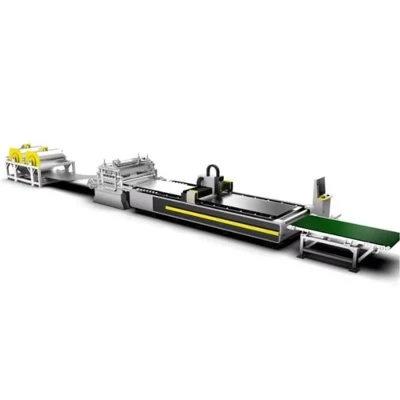
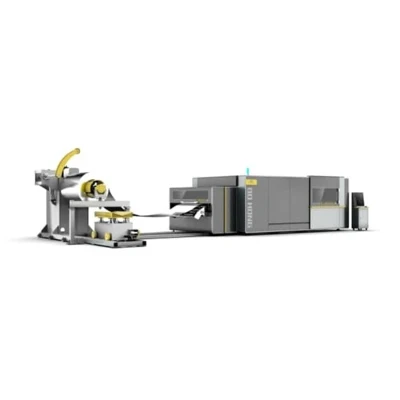
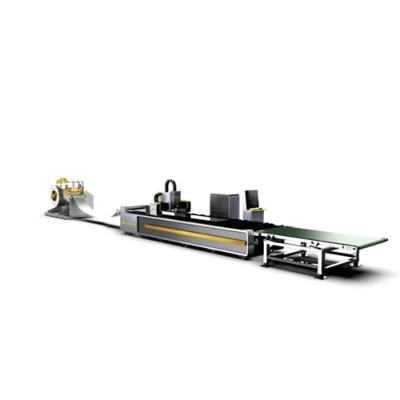
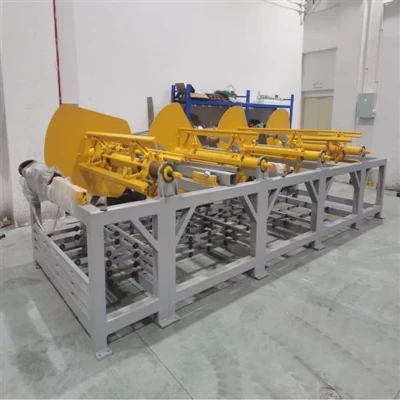
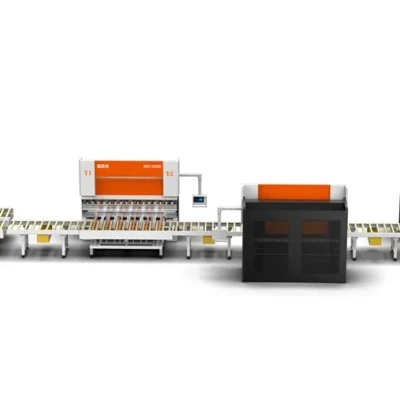
Conveying System: Utilizing equipment such as belt conveyors, roller conveyors, and magnetic levitation lines-combined with workpiece carriers-this system ensures precise positioning and the continuous, smooth circulation of materials between workstations.
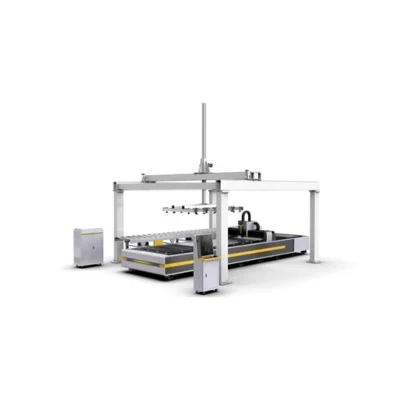
Machining and Assembly Unit: Comprising equipment such as CNC machine tools, articulated robots, and gantry robots, this unit independently performs core process tasks including machining, loading/unloading, welding, and precision assembly.
Inspection Unit: Leveraging machine vision and contact measurement equipment, this unit performs in-line inspection and automatic sorting for surface defects, dimensional accuracy, and functional performance, ensuring high product yield.
Sensor Network: Spanning the entire production line, this network continuously captures key signals-such as position, speed, and temperature-providing real-time, reliable data to support control decisions.
Feeding and Auxiliary Systems: These systems automate workpiece loading and simultaneously handle production byproducts-such as metal chips and cutting fluids-maintaining a clean environment and ensuring continuous line operation.