

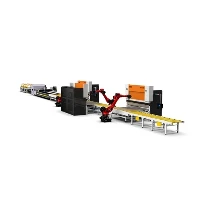
If you’ve ever stepped onto a production floor that processes sheet metal, you’ve probably watched coil-fed laser lines hum along—cutting everything from automotive body parts to appliance panels without stopping to reload individual blanks. But if you’ve shopped around for one of these systems, you’ve likely noticed two main categories: single section and multi section coil fed laser lines. Early in my career as a coil-fed laser line supplier, I confused these terms too. I thought “multi section” just meant more moving parts, and “single section” was a basic entry-level machine. After working with manufacturers across automotive, HVAC, and agricultural equipment, I’ve learned the difference is way more nuanced—it’s not just about size, it’s about workflow, uptime, and how a line fits your specific production needs.
Let’s start with the basics: what even is a coil-fed laser line? Unlike standalone laser cutters that cut one flat sheet at a time, these lines feed continuous metal coil (think 5,000-pound rolls of steel or aluminum) through a series of automated stations. The coil unrolls, is straightened, cut to shape, and stacked or nested into parts all in one seamless process. The number of “sections” refers to discrete, purpose-built stations along that line—unwinder, straightener, laser cutting head, part separation, stacking, and maybe secondary processing like bending or deburring. The line’s layout of these sections is where single section and multi section lines part ways.
Single section coil-fed laser lines, as the name implies, integrate all core functions into one compact unit. There’s no separate, independent module that runs parallel or in series with the main cutting area. For example, a single section line doesn’t have a second laser head cutting parts while the first finishes a nest—its workflow is linear, with each step flowing one after the other in a straight path. When I walk clients through our single section models, like the Single Station Enclosed Coil Laser Cutting Line, I point out that these are designed for small to mid-sized manufacturers that don’t run high volumes 24/7.
Don’t let the word “single” fool you, though. These lines don’t skimp on automation. The single station enclosed model I mentioned has a fully integrated unwinder, precision straightener, and enclosed laser cutting area that meets OSHA noise and safety standards. It’s compact enough to fit in a 40,000-square-foot production bay where floor space is tight. For a job shop that runs 8-hour shifts, making custom parts for a dozen different clients, this is ideal. You don’t need a team of operators to manage multiple modules—one person can load the coil roll, set the nest pattern, and monitor the touchscreen. The tradeoff here is speed: since the line only has one laser head, it can’t process two jobs at once. If you’re running 16-gauge steel at 100 feet per minute, the entire run is sequential, no parallel work.
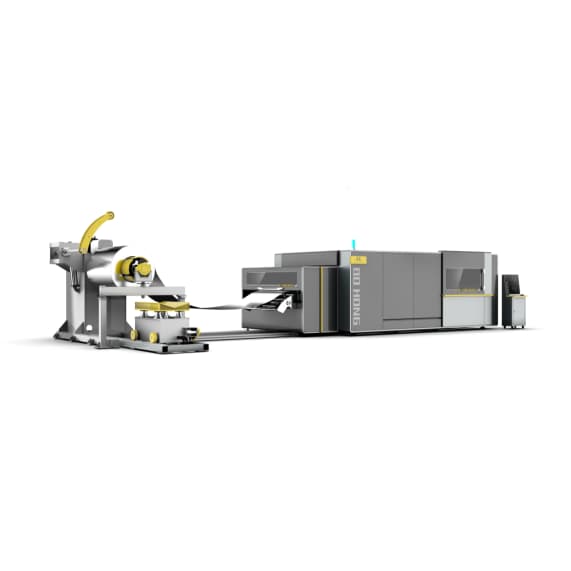
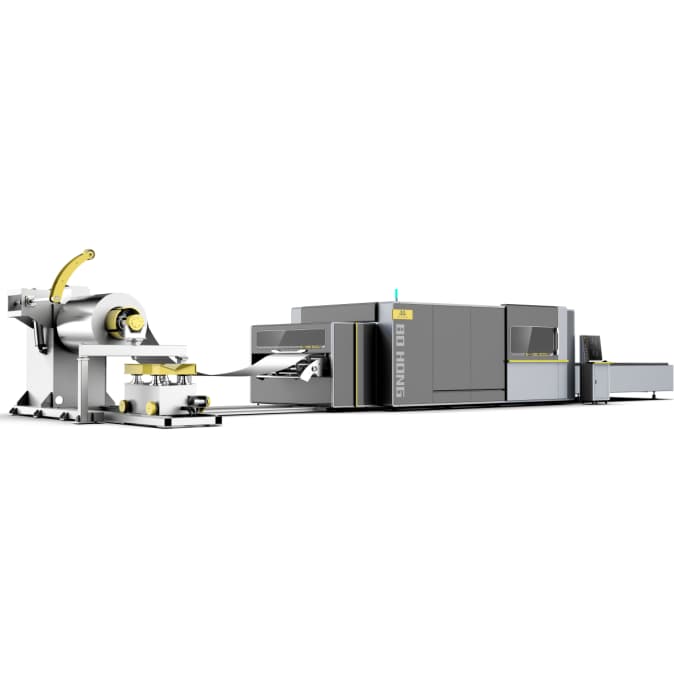
Now, multi section coil-fed laser lines are built for speed, flexibility, and high volume. These lines split their core functions into separate, independent sections that work in sync. The most common configuration we sell is a dual-head setup, which has two laser cutting stations: one nested in the main line, and a second parallel section that cuts parts while the first is processing a different part of the coil. The Dual Head Heavy Duty Coil Laser Cutting Line is our top-selling multi section model, and I’ve seen it boost production rates by 30-50% for clients running 20,000 pounds of coil a week.
What makes multi section lines different from just “bigger” single section lines is the parallel processing and dedicated secondary sections. A heavy duty multi section line might have a separate straightener that pre-feeds coil to the laser cutting stations while the previous cut is being stacked, eliminating downtime between jobs. Some multi section setups even include a secondary section for bending or marking parts right after cutting, so you don’t have to move parts to a separate press brake later. This is a game-changer for automotive suppliers that need consistent, high-volume chassis parts with tight tolerances. For example, a client in Detroit was using a single section line that took 2 hours to process a 10,000-pound coil; after upgrading to our dual head multi section line, they cut that time to 45 minutes, and reduced labor costs by 20% because one operator can manage both laser sections.
But speed isn’t the only difference. Uptime and maintenance are two big ones that I don’t see enough suppliers talk about. Single section lines have fewer moving parts, so there’s less to go wrong. If the laser head needs a lens replacement, or the straightener’s rollers wear out, the whole line has to stop—there’s no backup section to keep production running. Multi section lines are modular, so if one laser head goes down, the other can keep operating. Our Heavy Duty Coil Fed Laser Line has built-in diagnostic tools that let operators isolate a single section without shutting down the entire line, which cuts unplanned downtime by up to 40% for clients running lights-out shifts. That said, multi section lines require more regular maintenance because there are more parts—two laser heads mean two sets of consumables to replace, two sets of rollers in the straightener, and separate controls for each section.
Another key distinction is flexibility for job changeovers. Single section lines, like our Single Station C Frame Coil Laser Cutting Line, are great for quick changeovers between small batches. Since there’s no parallel section, you can switch from cutting 12-inch HVAC duct parts to 24-inch shelf brackets in 15 minutes, no need to reconfigure multiple stations. Multi section lines, while flexible, take a bit longer to switch over—because you have two laser heads, you might need to adjust the nest pattern for both, or recalibrate the parallel feed. That makes multi section lines better for long production runs (1,000+ parts per batch) where the setup time is offset by the faster cutting speed. For job shops that run 50 different 10-part batches a week, the single section line’s quick changeovers are a huge advantage.
Cost is, of course, a major factor for most manufacturers. When we quote a system, I always break down the total cost of ownership, not just the upfront price. A standard single section line, like our Standard Coil Fed Laser Line, costs roughly 30-40% less than a comparable multi section line. That’s a big difference for small businesses or startups working with tight budgets. But over time, the higher upfront cost of a multi section line can pay for itself in faster production and lower labor costs. We had a client in Texas that runs agricultural equipment parts—they started with a single section line for their first year, when they were still ramping up orders. Once they landed a contract for 50,000 parts a month, they upgraded to a dual head multi section line and increased their monthly output by 60%, with only a 10% increase in operating costs.
I also want to talk about material range, because that’s where lines are often underrated. Single section lines work with thin to medium gauge material—up to 1/4-inch steel, typically. Multi section lines are built with heavier-duty components, so they can handle up to 1/2-inch steel, thicker aluminum, and even stainless steel with higher throughput. That’s important for clients that work with structural parts or heavy equipment, where thin material won’t hold up.
But here’s the thing I always stress to clients: there’s no “better” line—only the right line for your business. I’ve seen small job shops make a killing with a compact single section line, and large manufacturers scale to $10M+ in annual revenue with multi section systems. The worst mistake you can make is buying a multi section line you don’t need, just because it’s faster. We had a client that bought a dual head line thinking it would solve their production bottleneck, but they only run 10,000 parts a month—so the second laser head sat unused half the time, wasting money on extra maintenance and consumables. On the flip side, a client that runs high volume tried to save money on a single section line, and they couldn’t meet their delivery deadlines, losing a major account.
So, how do you decide which one is right for you? Ask yourself three questions: First, what’s your monthly production volume? If you’re under 20,000 parts a month, a single section line is probably enough. If you’re over that, or planning to grow into it, a multi section line will save you time and money long-term. Second, what’s your typical batch size? If most of your jobs are under 100 parts, quick changeovers matter more than speed—single section is better. If you’re running 500+ parts per batch, the parallel processing of multi section is worth the extra setup time. Third, what’s your floor space? Multi section lines are longer—our dual head line is 120 feet long, while our single station enclosed line is 60 feet—so make sure you have space for it before you commit.
As a supplier, my goal isn’t to sell the most expensive line—it’s to sell a line that works for your specific needs. I’ve spent years testing every model in our line, working with clients to tweak setup, adjust speed, and fine-tune workflows to fit their production. If you’re researching coil-fed laser lines, take the time to walk through a line in action, not just look at specs. See how fast it changes over a batch, how easy the controls are to use, and how the line handles your actual material. Don’t let marketing jargon about “industrial-grade” or “high-speed” sway you—those terms mean nothing if the line can’t keep up with your orders.
At the end of the day, the difference between single section and multi section coil-fed laser lines comes down to workflow optimization. Single section lines streamline small, flexible operations. Multi section lines maximize throughput for high-volume, consistent production. There’s no one-size-fits-all, but understanding that core difference will help you make a decision that grows with your business. If you’re ready to talk through your needs, or want to see any of our models in action—from the compact single station lines to the heavy duty multi section setups—we’re here to help you find the right fit.
References
- Laser Institute of America. (2022). Industrial Laser Cutting Systems: Workflow and Efficiency Standards. LIA Press.
- Metalforming Magazine. (2023). Coil-Fed Processing Trends for Job Shops and High-Volume Manufacturers. Fabricators & Manufacturers Association.
- International Organization for Standardization. (2021). Safety Requirements for Laser Processing Machines (ISO 11553:2021). ISO Central Secretariat.
- Smith, J. (2022). Total Cost of Ownership for Metal Fabrication Equipment. Journal of Manufacturing Operations, 18(3), 45-52.
- Automotive Industry Action Group. (2023). Coil-Fed Laser Line Specifications for Chassis Component Production. AIAG Technical Report.